

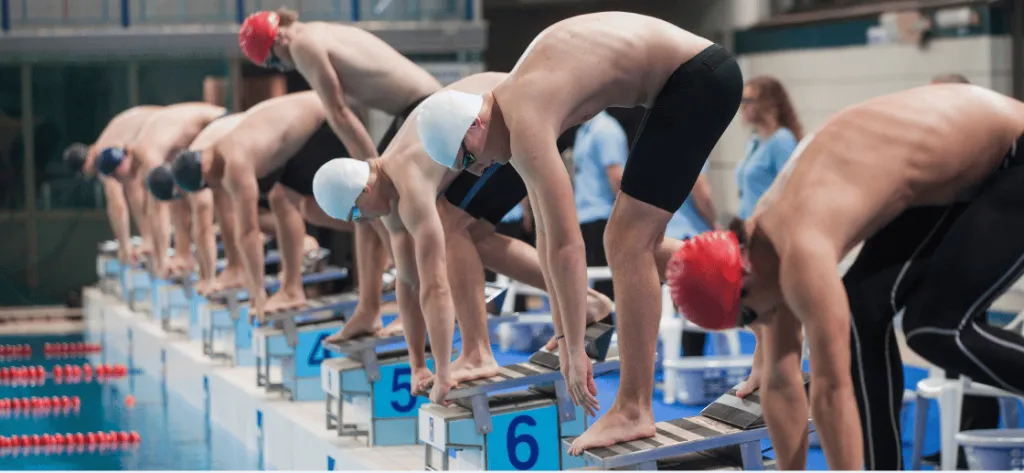
12 Benefits of Competitive Swimming for Children and Adults
Discover how competitive swimming develops physical fitness, swimming technique, discipline, confidence and valuable life skills.
Swimming is more than a recreational activity. For individuals who want to develop their abilities further, competitive swimming provides opportunities to improve technique, fitness and personal performance.
Competitive swimming involves structured training, measurable goals and the development of swimming skills for different events and distances.
Whether a swimmer is preparing for a school competition, improving a personal-best time or participating in a swimming club, competitive swimming can offer benefits beyond the swimming pool.
At Friendly Dolphin Swim School, we believe swimming should support both physical development and positive personal growth.
Here are 12 important benefits of competitive swimming.
1. Improves Cardiovascular Fitness
Competitive swimming involves repeated swimming activities that challenge the heart, lungs and muscles.
Through appropriately structured training, swimmers can progressively improve cardiovascular fitness and exercise endurance.
Competitive swimmers may practise different swimming distances, speeds and training intensities.
Over time, consistent training can help swimmers sustain physical activity for longer periods and recover more effectively between suitable exercise efforts.
2. Develops Muscular Strength and Endurance
Swimming engages multiple muscle groups throughout the body.
The arms, shoulders, back, core and legs work together to propel the swimmer through the water.
Competitive swimming training may include:
- Freestyle swimming
- Backstroke swimming
- Breaststroke swimming
- Butterfly swimming
- Kicking drills
- Pulling drills
- Sprint and endurance sets
These activities can help develop muscular endurance and swimming-specific strength.
However, balanced training and sufficient recovery remain important, particularly for younger swimmers.
3. Improves Swimming Technique
One of the main objectives of competitive swimming is to develop more efficient swimming techniques.
Swimmers learn to refine body positioning, breathing, kicking, arm movements and stroke coordination.
Good technique helps reduce unnecessary resistance and allows swimmers to use their energy more efficiently.
For example, a competitive freestyle swimmer may work on body rotation, arm recovery, underwater pulling technique and breathing coordination.
Repeated practice and coaching feedback can help swimmers improve their movements over time.
4. Develops Speed and Swimming Endurance
Competitive swimming allows swimmers to work towards measurable performance improvements.
Sprint training focuses on developing speed over shorter distances, while endurance training helps swimmers maintain suitable technique over longer distances.
Depending on the swimmer’s age and ability, training may involve timed swims, interval sets and progressively challenging distances.
The objective is to improve performance through suitable training rather than simply swimming as fast as possible during every lesson.
5. Encourages Discipline and Consistency
Competitive swimming requires regular practice, preparation and commitment.
Swimmers learn the importance of attending training, following instructions and practising skills repeatedly.
These experiences can help develop habits such as:
- Time management
- Personal responsibility
- Consistent effort
- Goal setting
- Preparation
- Commitment to improvement
These habits can also be valuable in education, work and everyday life.
6. Builds Self-Confidence
Competitive swimming provides opportunities for swimmers to recognise their own progress.
For example, a swimmer may initially struggle to complete a particular distance but gradually improve through consistent practice.
Other achievements may include learning a new stroke, improving a personal-best time or completing a competition.
These experiences can help develop confidence in one’s abilities.
Healthy confidence comes from recognising genuine improvement and understanding that progress requires effort, learning and practice.
7. Develops Goal-Setting Skills
Competitive swimmers often work towards specific performance goals.
These goals may include:
- Improving a 50-metre freestyle time
- Developing a more efficient butterfly stroke
- Improving swimming endurance
- Learning competitive starts and turns
- Qualifying for an appropriate swimming event
- Improving personal-best times
Setting realistic goals helps swimmers understand what they are working towards.
Coaches can then plan suitable training activities and assess progress over time.
8. Encourages Resilience and Perseverance
Competitive swimming involves both successful performances and disappointments.
A swimmer may improve during one competition but perform below expectations during another.
Learning to respond constructively to these experiences can help develop resilience.
Swimmers can learn to review their performances, identify areas for improvement and continue practising.
The emphasis should be on learning and personal development rather than treating every result as a measure of personal worth.
9. Develops Concentration and Decision-Making
Competitive swimming requires swimmers to pay attention to technique, pacing, timing and race execution.
For example, swimmers may need to decide how to distribute their effort across different race distances.
They also practise maintaining concentration during starts, turns and finishes.
These activities provide opportunities to develop task-focused attention and performance-related decision-making.
10. Encourages Teamwork and Sportsmanship
Although many swimming events are individually contested, competitive swimmers often train alongside teammates.
Swimming teams and group training environments can encourage cooperation, mutual encouragement and respect for others.
Relay events also require swimmers to contribute towards a shared team result.
Through appropriate coaching, swimmers can learn the importance of fair competition, respecting opponents and supporting teammates.
11. Supports Physical and Mental Well-Being
Regular physical activity can contribute positively to physical health and psychological well-being.
Competitive swimming offers a structured way to remain active, develop fitness and participate in a sporting community.
Some swimmers also find swimming enjoyable and helpful for managing everyday stress.
However, competitive training should be balanced with rest, recovery, nutrition and other responsibilities.
Excessive training pressure, inadequate recovery or unhealthy expectations can undermine well-being.
A positive competitive swimming environment should encourage sustainable participation and enjoyment.

