Front crawl, also commonly called freestyle, is one of the most widely used swimming strokes. When performed correctly, it allows a swimmer to move efficiently through the water using a combination of body position, kicking, arm movements, breathing and timing.
For beginners, trying to learn everything at once can be difficult. A simpler approach is to break front crawl into several parts and then gradually combine them.
At Friendly Dolphin Swim School, swimmers can learn front crawl progressively:
body → legs → arms → breathing → timing → full stroke
1. Body Position
Good front crawl starts with good body position.
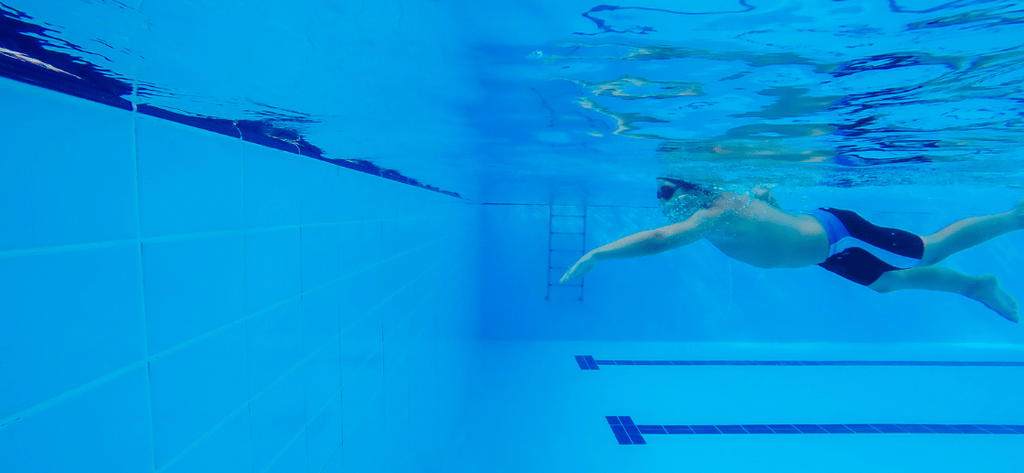
The swimmer should aim to keep the body long and relatively horizontal in the water. The head should remain in a comfortable, neutral position rather than being lifted too high.
A streamlined body position helps reduce resistance and makes it easier to move through the water.
Beginners can practise by pushing away from the pool wall in a streamlined position and gliding through the water.
Teaching points:
- keep the body long
- look mainly downward
- keep the head relaxed
- keep the hips and legs near the surface
- avoid lifting the head unnecessarily
The goal is to create a balanced position before adding more complicated movements.
2. Front Crawl Leg Kick
Once the swimmer has developed a comfortable body position, the next step is the front crawl kick, commonly known as the flutter kick.
The legs kick alternately up and down in a continuous movement.
The movement should come mainly from the hips, with the knees remaining relaxed rather than performing a large cycling movement.
The ankles should also remain relaxed so that the feet can help move water effectively.
Teaching points:
- kick continuously
- initiate the movement from the hips
- keep the legs relatively straight but relaxed
- allow a small natural bend at the knees
- keep the ankles relaxed
- use small, controlled kicks rather than very large kicks
Beginners can practise kicking while holding a kickboard or in a streamlined position
3. Front Crawl Arm Action
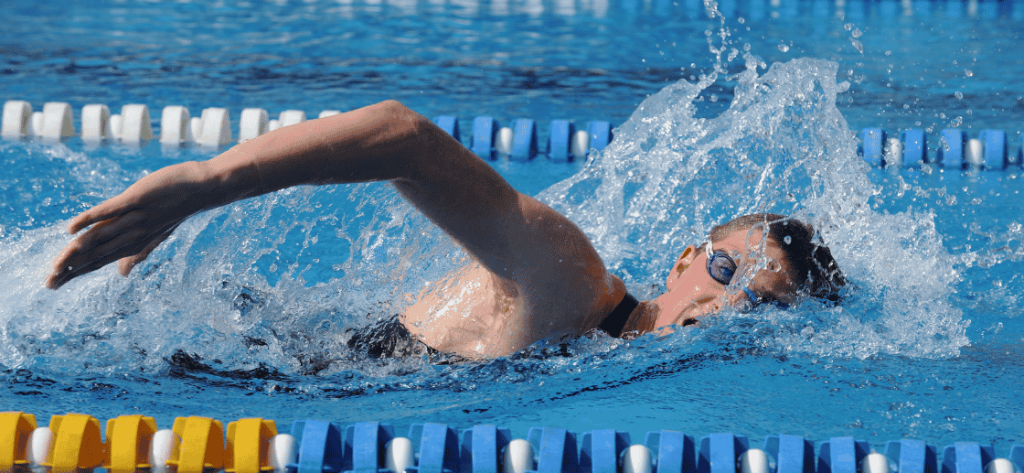
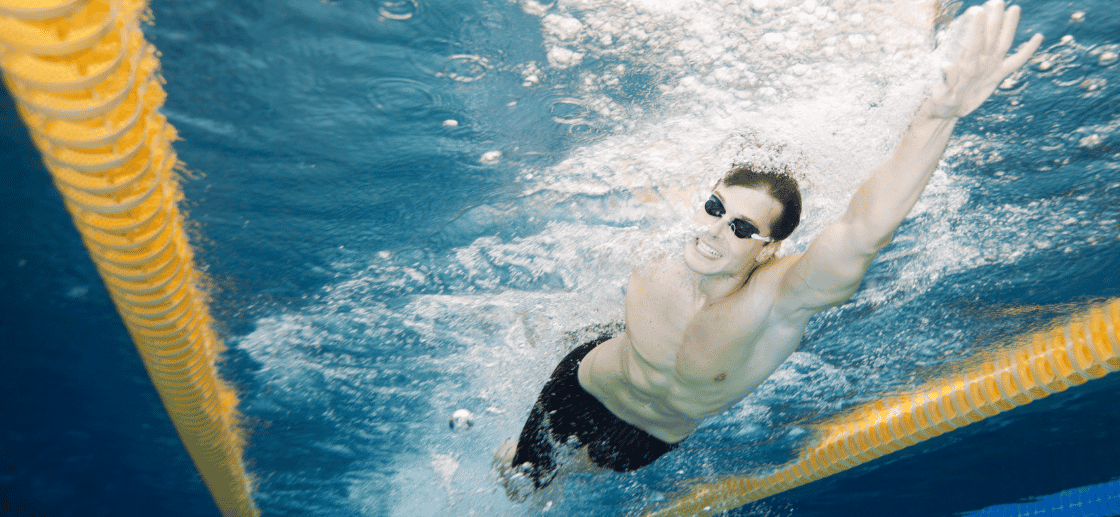
Front crawl uses alternating arm movements. While one arm is working through the water, the other arm is recovering above the water.
The arm action can be divided into several stages.
Entry and extension
The hand enters the water in front of the swimmer and the arm extends forward.
Catch
The swimmer positions the hand and forearm to begin applying pressure against the water.
Pull and push
The arm moves backwards through the water to help propel the body forward.
Recovery
After completing the underwater movement, the arm exits the water and travels forward in a relaxed recovery before beginning the next stroke.
The two arms continue alternating.
Teaching points:
- reach forward comfortably
- catch the water
- pull and push the water backwards
- recover the arm smoothly
- alternate the arms continuously
Instead of thinking only about moving the arms quickly, swimmers should learn to move the water effectively.
4. Breathing
Breathing is often one of the most challenging parts of front crawl for beginners.
The swimmer should avoid lifting the entire head forward to breathe. Instead, the body rotates slightly and the head turns to the side.
The swimmer takes a breath through the mouth and then returns the face to the water.
Exhalation should take place while the face is in the water rather than trying to inhale and exhale completely during the short breathing period.
A simple sequence is:
face in → breathe out → turn → breathe in → face back in
This helps create a smoother breathing rhythm.
5. Timing and Coordination
Once the swimmer can perform the individual movements, the next challenge is coordinating them.
Front crawl is not simply arms, legs and breathing happening independently. They need to work together in a controlled rhythm.
The legs continue kicking while the arms alternate. When it is time to breathe, the swimmer rotates and turns the head as part of the stroke rather than stopping the stroke to take a breath.
A useful progression is:
kick → add arms → add breathing → coordinate everything
Good timing helps the stroke become smoother and more efficient.
6. Putting the Full Front Crawl Together
The final stage is combining all five elements:
body + legs + arms + breathing + timing = front crawl
The swimmer maintains a balanced body position while kicking continuously. The arms alternate to provide propulsion, while the body rotates naturally with the stroke. Breathing is incorporated without significantly interrupting the swimming rhythm.
Beginners should not worry about making every movement perfect immediately.
Swimming is a skill developed through repetition. As coordination improves, the stroke usually becomes smoother and requires less conscious thought.
Common Front Crawl Mistakes
Some common beginner mistakes include:
- lifting the head too high when breathing
- holding the breath underwater
- bending the knees excessively when kicking
- kicking too widely
- crossing the arms over the body’s centre line
- rushing the arm movements
- stopping the kick when breathing
- losing body position while trying to coordinate the stroke
Correcting one element at a time is often easier than trying to correct the entire stroke simultaneously.
Learn Front Crawl Step by Step
Front crawl may initially look complicated because several movements happen at the same time. Breaking the stroke into smaller components makes the learning process easier to understand.
At Friendly Dolphin Swim School, we teach swimmers progressively so they can first understand individual skills before learning to coordinate them.
The basic learning sequence is simple:
body → legs → arms → breathing → timing → full stroke
With regular practice and appropriate instruction, swimmers can gradually develop a front crawl that is confident, coordinated and efficient.